
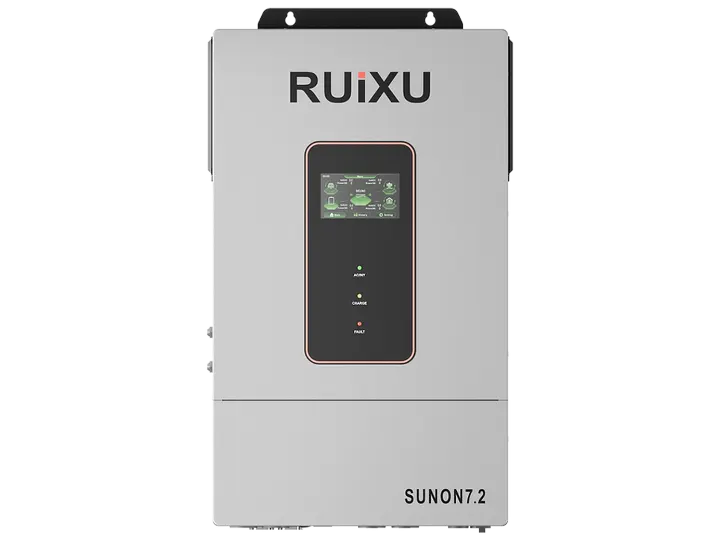
Sunon 7.2 7200W All-in-One Inverter
8.8 / 10 · Budget Friendly
Sunon 7.2 7200W All-in-One Inverter
A strong value for buyers who want 48V split-phase power in a smaller all-in-one package, as long as they understand load balancing across the two 120V legs.
This 48V split-phase all-in-one inverter appears to deliver solid real-world performance, especially under heavier loads. The main strengths are stable output, straightforward battery communication, useful onboard controls, and pricing that looks competitive for the class. The biggest thing to understand before buying is that the 7200W output is split across L1 and L2, so 120V load placement matters.
Watch Before You Buy
See how it actually performs
Best For
This is best for users who want reliable performance without jumping into ultra expensive systems.
Watch For
Limited expansion if your power needs grow significantly
Quick Decision
The fast answer most buyers actually want
This section is built to help you decide quickly whether this product fits your needs before you dig through the rest of the review.
Standout Feature
Stable 120/240V split-phase output with good heavy-load performance in a relatively compact 7.2kW class inverter.
Biggest Tradeoff
You need to manage and balance 120V loads across L1 and L2, because one leg can approach its limit before total output reaches 7200W.
Value Summary
For buyers building an off-grid or backup-ready 48V system, this looks like a practical option with strong feature density and solid test results for the money. It makes the most sense for people who want split-phase capability without stepping into a much larger or more expensive inverter platform.
Use Case Fit
Where this product fits best in real life
This section helps you quickly map the product to real scenarios so you can tell whether it fits your situation or whether you should be looking at something else.
Off-grid cabin or small home needing 120/240V service
Excellent FitA strong match for buyers who need split-phase power for mixed household loads, including 240V equipment, and want an all-in-one system built around 48V batteries.
Backup power system with generator support
Good FitUseful for backup setups where transfer time, AC charging, and generator integration matter, especially if some automation is planned through dry contact features.
Plug-and-play buyers who want the best app experience
Situational FitThis may still work well, but buyers who care a lot about polished mobile monitoring may find the app side less satisfying than the core hardware.
Buying Options
Sunon 7.2 7200W All-in-One Inverter
Choose the best buying path based on how you like to shop
Scorecard
How this product stacks up where it actually matters
This scorecard gives a faster read on the categories most buyers care about so you can spot the strengths and tradeoffs without digging through every section first.
Power Delivery
0.0 / 10
Handled substantial loads well and stayed stable close to rated continuous output, with the main caution being per-leg limits on split-phase output.
Ease of Setup
0.0 / 10
Battery communication and onboard controls appear straightforward, though installation details like tight terminal space may slow some setups.
Monitoring and Interface
0.0 / 10
The onboard screen and menu system seem very good, but the SolarMan app experience sounds more functional than polished.
Value for Money
0.0 / 10
Given the pricing mentioned and the test results described, this looks like a strong value in the 7.2kW split-phase category.
Pricing Intelligence
Good value if you need split-phase without overspending
Based on the creator's notes and testing, this inverter stands out more on value than on flashy extras. If the current price stays close to the level mentioned in the source material, it looks competitive for buyers who need 120/240V split-phase output, dual MPPTs, and battery communication in one box.
Buying Insight
Value depends on whether you actually need split-phase
If you need 120/240V output, this package looks more compelling. If you only need 120V, a simpler inverter may offer better overall value.
Buying Insight
Price makes more sense when replacing multiple components
An all-in-one design can reduce the need for separate inverter and charge components, which can make the total system cost easier to justify.
Buying Insight
Compare by real usable setup, not just wattage
When comparing alternatives, look at MPPT capacity, battery communication, transfer time, generator support, and per-leg power behavior rather than only the headline 7200W figure.
Amazon Path
Usually best for speed, easy checkout, and familiar returns.
Brand Store Path
Usually best when direct support, bundles, or direct promos matter more.
How I Test
Real-World Testing Matters More Than Spec Sheets
A useful inverter review should look beyond headline wattage and focus on how the unit behaves under load, how it handles heat and noise, how easy setup is, and what limitations show up in actual use.
Test Focus
Heavy load testing near rated output
The inverter was pushed close to its continuous output using a mix of 240V and 120V loads to see whether output stayed stable and whether any warnings appeared.
Test Focus
Thermal and fan noise checks
A thermal camera was used after sustained loading to look for abnormal hot spots, and fan noise was measured during operation under significant load.
Test Focus
Battery communication and software setup
Battery communication was tested along with basic configuration and monitoring to see how practical the inverter is to set up and live with.
Technical Details
Key specs that matter early in the buying decision
This section belongs near the top because serious buyers often want to sanity check the core specs before they commit more time.
Battery System
48V
AC Output
120/240V split phase
Continuous Output
7200W pure sine wave
Solar Input
Dual MPPT, up to 9000W total
What I liked
Handled heavy real-world loads well
Split-phase 120/240V output in a smaller all-in-one format
Battery communication setup appears simple
Onboard display and controls are easy to understand
Competitive value based on tested performance
What gave me pause
120V loads need to be balanced across L1 and L2
App experience is less polished than the hardware
Idle power draw still matters for smaller off-grid battery banks
Questions that matter before and after the click
This section is split intentionally so buyers can either validate the purchase decision or dig deeper into real world ownership questions.
No, not in the way many buyers first assume. The output is divided across L1 and L2, so a single 120V leg can approach its own limit before the inverter reaches 7200W total output.
It looks well suited for off-grid setups, especially if you need 240V loads and 48V battery support. Buyers should still factor in idle consumption, ventilation, and panel load balancing.
Only if remote monitoring polish matters a lot to you. The source material suggests the hardware and onboard interface are stronger than the mobile app experience.
Based on the testing described, it stayed stable near continuous output and did not show strange behavior as load increased. The main warning behavior showed up when one 120V leg got close to its limit.
The measured fan noise during significant load was described at roughly 53 to 54 dB, which suggests it is noticeable but not unusually loud for this class.
Thermal testing did not show obvious problem spots during the review, but this is still an indoor inverter and high ambient temperatures could matter, especially in hot garages or utility spaces.
Should you buy the Sunon 7.2 7200W All-in-One Inverter?
If you need a smaller 48V split-phase all-in-one inverter and you're comfortable designing around per-leg load limits, this looks like an easy one to shortlist. It is not the most polished software experience on the Wi-Fi side, but the core inverter performance, thermal behavior, and overall usability seem genuinely solid.