
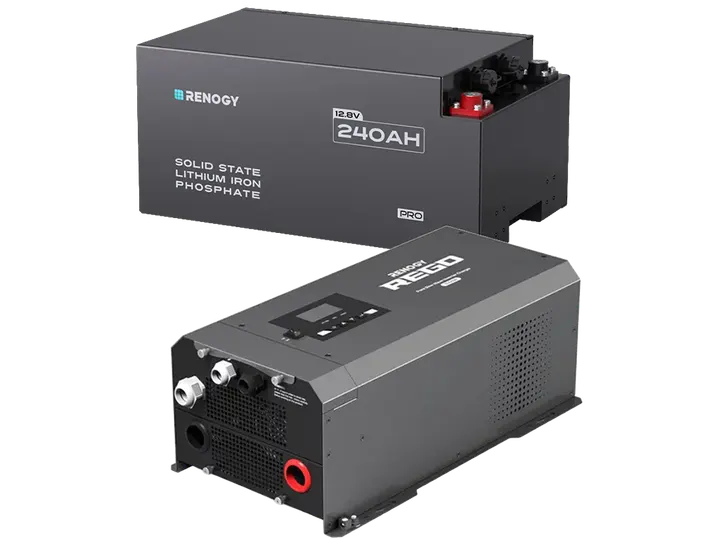
Renogy Pro S1 LiFePO4 Battery
8.6 / 10 · Premium
Renogy Pro S1 LiFePO4 Battery
The Renogy Pro S1 looks like a strong premium option for buyers who care more about safety, lifespan, and build quality than getting the lowest cost per amp hour.
This battery stands out for its semi-solid-state design, long claimed cycle life, stronger safety positioning, and premium build details like Bluetooth, CAN bus support, and self-heating on supported models. The main tradeoff is simple: it appears to be built for buyers willing to pay extra for durability and peace of mind, not bargain shoppers.
Watch Before You Buy
See how it actually performs

Best For
This is best for users who want reliable performance without jumping into ultra expensive systems.
Watch For
Limited expansion if your power needs grow significantly
Quick Decision
The fast answer most buyers actually want
This section is built to help you decide quickly whether this product fits your needs before you dig through the rest of the review.
Standout Feature
Its semi-solid-state LiFePO4 design aims to improve safety and stability while still offering the practical maturity of a proven battery platform.
Biggest Tradeoff
It is positioned as a premium battery, so the value depends on whether you actually need the added safety, lifespan, and construction benefits.
Value Summary
For buyers building a long-term off-grid system, the Pro S1 appears to offer its best value through durability, safety-focused design, and premium system integration rather than raw affordability.
Use Case Fit
Where this product fits best in real life
This section helps you quickly map the product to real scenarios so you can tell whether it fits your situation or whether you should be looking at something else.
Premium van or RV electrical systems
Excellent FitA strong match for buyers trying to fit a battery into tighter spaces while also wanting app monitoring, cold-weather support, and a more premium safety profile.
Tiny homes or off-grid cabins prioritizing longevity
Good FitThe long claimed cycle life and stronger construction may appeal to buyers who want fewer battery replacements over time and are comfortable paying more upfront.
Budget-focused DIY solar builds
Situational FitIt may still work well here, but the premium positioning means many buyers in this category may be better served by a less expensive standard LiFePO4 battery.
Buying Options
Renogy Pro S1 LiFePO4 Battery
Choose the best buying path based on how you like to shop
Scorecard
How this product stacks up where it actually matters
This scorecard gives a faster read on the categories most buyers care about so you can spot the strengths and tradeoffs without digging through every section first.
Safety and Stability
0.0 / 10
The semi-solid-state approach, reduced liquid electrolyte, and emphasis on thermal protection are some of the strongest reasons to consider this battery.
Power Delivery
0.0 / 10
Low claimed internal resistance and strong discharge capability suggest solid performance under demanding loads, though long-term real-world validation still matters.
Features and Monitoring
0.0 / 10
Bluetooth app support, CAN bus connectivity, and self-heating support add meaningful ownership value for more advanced off-grid setups.
Value for Money
0.0 / 10
It appears well equipped, but the premium positioning means the value depends heavily on whether you will benefit from the added safety, compactness, and lifespan claims.
Pricing Intelligence
Worth considering if long-term reliability matters more than entry cost
This looks like a battery for buyers who want to spend more upfront to potentially get better longevity, stronger safety margins, and a more refined ownership experience. If your setup is simple or budget driven, standard LiFePO4 options may make more sense.
Buying Insight
Premium only makes sense if you keep the system long term
A battery like this is easier to justify when you plan to use it for years and want to reduce replacement risk rather than minimize upfront cost.
Buying Insight
Compare against standard LiFePO4, not just other premium models
Before buying, it makes sense to ask whether the semi-solid-state design, extra warranty coverage, and size savings are worth the jump over a more typical LiFePO4 option.
Buying Insight
Best value is likely in demanding or space-constrained installs
The compact packaging, higher-end protections, and cold-weather support matter more when your install is tight, mobile, or exposed to wider operating conditions.
Amazon Path
Usually best for speed, easy checkout, and familiar returns.
Brand Store Path
Usually best when direct support, bundles, or direct promos matter more.
How I Test
Real-World Off-Grid Value Matters More Than Spec Sheets
A useful battery review should look past headline claims and focus on real ownership factors like safety, usable power delivery, install flexibility, cold-weather behavior, monitoring, and whether the premium price actually makes sense for the buyer.
Test Focus
Spec claim review with buyer-focused context
The draft evaluates headline claims like semi-solid-state design, cycle life, internal resistance, and discharge capability in terms of what they likely mean for real buyers rather than repeating marketing language.
Test Focus
Feature relevance for off-grid ownership
Attention is placed on install size, Bluetooth monitoring, CAN bus integration, self-heating behavior, and protection systems because those matter in daily use.
Test Focus
Tradeoff-based buying assessment
Instead of assuming premium means better for everyone, the review frames where the extra investment may be justified and where a conventional battery could be the smarter buy.
Technical Details
Key specs that matter early in the buying decision
This section belongs near the top because serious buyers often want to sanity check the core specs before they commit more time.
Battery Chemistry
Semi-solid-state LiFePO4
Claimed Cycle Life
6,000+ cycles
Warranty
7 years
Connectivity
Bluetooth monitoring and CAN bus integration
What I liked
Semi-solid-state design with a stronger safety focus than typical LiFePO4
Long claimed cycle life and longer warranty than many alternatives
Compact and lighter packaging relative to standard batteries in similar capacity classes
Bluetooth monitoring and CAN bus support add real system visibility
Self-heating support improves cold-weather practicality
What gave me pause
Premium positioning will not make sense for every budget
Not a true solid-state battery despite the branding language
Cold-weather charging still depends on the heating system bringing temperature up first
12-volt architecture may not be the right fit for every larger power system
Questions that matter before and after the click
This section is split intentionally so buyers can either validate the purchase decision or dig deeper into real world ownership questions.
No. Based on the transcript, it is more accurately described as a semi-solid-state LiFePO4 battery, not a full solid-state battery. That distinction matters because it affects both expectations and how the product should be compared with other battery types.
It seems best suited to buyers building higher-end off-grid systems in vans, RVs, tiny homes, boats, or similar setups where safety, lifespan, compact size, and monitoring features matter more than lowest upfront cost.
Maybe, but cautiously. If your main goal is maximizing capacity for the money, a standard LiFePO4 battery may be the better buy. The Pro S1 makes more sense when its premium design and features solve a real need in your setup.
It should be genuinely useful for checking voltage, current, capacity, and temperature without needing direct physical access to the battery. That matters more in vans, cabinets, and tight battery compartments.
The transcript says the battery includes a self-heating option, but also makes clear that the battery cannot charge at negative 20 Celsius until the heating film raises the core temperature first. So cold-weather support is helpful, but it does not remove all cold-weather limits.
No. The transcript specifically notes that while the battery can handle high peak discharge, running it hard repeatedly is still likely to shorten lifespan compared with more moderate use.
Should you buy the Renogy Pro S1 LiFePO4 Battery?
Based on the available information, the Renogy Pro S1 makes the most sense for premium off-grid builds where safety, compact packaging, and long-term confidence matter more than buying the cheapest battery possible. If those benefits match your priorities, it looks compelling. If not, a more conventional LiFePO4 battery may offer better value.