
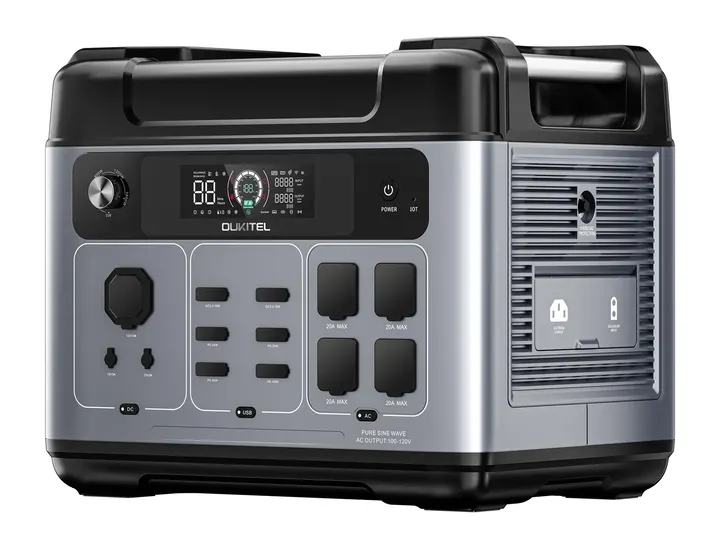
Oukitel Portable Power Station
4.8 / 10 · Mid Range
Oukitel Portable Power Station
This power station shows too many functional and reliability concerns in testing to be an easy recommendation, especially if you care about charging accuracy, UPS behavior, or app connectivity.
The main issue here is not one isolated weakness but a pattern of underperformance across several basic functions. In the review, it missed its stated 1800W AC charging figure, had trouble recharging near full battery, failed to connect to Wi-Fi without extra router workarounds, and showed questionable behavior around UPS use and GFCI circuits. It does appear to manage heat reasonably well, but that is not enough to offset the other concerns.
Watch Before You Buy
See how it actually performs

Best For
This is best for users who want reliable performance without jumping into ultra expensive systems.
Watch For
Limited expansion if your power needs grow significantly
Quick Decision
The fast answer most buyers actually want
This section is built to help you decide quickly whether this product fits your needs before you dig through the rest of the review.
Standout Feature
It appears to keep heat under control reasonably well during charging.
Biggest Tradeoff
Core functions like charging behavior, Wi-Fi setup, and UPS performance raised enough issues that trust becomes the main concern.
Value Summary
For buyers who only need basic portable power and do not care about app control or UPS use, there may be some appeal if pricing is aggressive. But based on this testing, the value case weakens quickly because several important features either underperformed or behaved inconsistently.
Use Case Fit
Where this product fits best in real life
This section helps you quickly map the product to real scenarios so you can tell whether it fits your situation or whether you should be looking at something else.
Basic backup power for less demanding use
Situational FitIt may still work for buyers who only need occasional power for lighter tasks and are not relying on app control, UPS mode, or exact charging performance.
Remote monitoring through app control
Situational FitThe reviewer could not get Wi-Fi setup working without router-related compromises, so this is only a fit if app connectivity is not a priority or you are willing to troubleshoot.
Higher-trust home backup or UPS-style use
Good FitThis is actually a poor match based on the reported issues. Buyers who need stable UPS behavior or confidence on household circuits should probably skip it and look elsewhere.
Buying Options
Oukitel Portable Power Station
Choose the best buying path based on how you like to shop
Scorecard
How this product stacks up where it actually matters
This scorecard gives a faster read on the categories most buyers care about so you can spot the strengths and tradeoffs without digging through every section first.
Charging Performance
0.0 / 10
The unit did not reach its stated 1800W AC charge rate in testing and also showed odd behavior when trying to recharge from 98% to full.
Ease of Setup
0.0 / 10
Wi-Fi setup was a problem, and the reviewer was not willing to rework a stable home network just to get the app connected.
Everyday Reliability
0.0 / 10
Reported issues included a GFCI trip, inconsistent charging behavior, and UPS limitations that raise confidence concerns.
Heat Management
0.0 / 10
This was one of the better areas. The unit appeared to keep temperatures relatively controlled, and the cord did not show overheating concerns in the test.
Pricing Intelligence
Only worth considering if the price clearly reflects the compromises
A lower price does not automatically make a power station a good buy if reliability and everyday usability are in question. Buyers should weigh the reported feature failures against similarly priced alternatives with more consistent performance.
Buying Insight
Price only helps if you can accept the compromises
Even a competitive price becomes harder to justify when the main concerns involve trust, consistency, and basic operation rather than minor convenience issues.
Buying Insight
Compare against proven alternatives
If you are shopping in this class, it makes sense to compare not just battery size or output claims but also charging accuracy, app setup, and circuit behavior.
Buying Insight
Wait for improvements or more confirmed testing
If this model interests you, the cautious move is to wait for either a revised version or more independent testing that confirms whether these issues are isolated or repeatable.
Amazon Path
Usually best for speed, easy checkout, and familiar returns.
Brand Store Path
Usually best when direct support, bundles, or direct promos matter more.
How I Test
Real-world performance matters more than spec-sheet claims
This draft is built around practical use: whether the unit charges as claimed, behaves predictably on household circuits, stays manageable in noise and heat, and works the way a buyer would reasonably expect without workarounds.
Test Focus
AC charging verification
The reviewer checked whether the unit would recharge consistently and whether its actual AC input matched the stated charging levels, including the claimed 1800W mode.
Test Focus
Household circuit and UPS behavior
Testing included observing how the power station behaved on a GFCI-protected circuit and whether UPS mode could handle output loads close to its stated capability.
Test Focus
Noise and thermal observation
The review measured fan noise during maximum charging and checked exterior heat output and cord temperature to see whether the unit ran hot or remained reasonably controlled.
Technical Details
Key specs that matter early in the buying decision
This section belongs near the top because serious buyers often want to sanity check the core specs before they commit more time.
Claimed AC Charging
1800W
Observed Max AC Charging in Review
About 1680W
Claimed Output Mentioned for UPS Context
2400W
Wi-Fi Frequency Mentioned
2.4GHz
What I liked
Stayed relatively controlled on heat during charging
Cord did not appear to overheat in the test shown
Selectable charging levels appeared to track correctly at 400W, 800W, and 1200W
What gave me pause
Did not reach the stated 1800W AC charging rate in testing
Would not begin charging near full battery in the scenario shown
Wi-Fi setup failed without router-related workarounds
UPS and circuit behavior raised reliability concerns
Questions that matter before and after the click
This section is split intentionally so buyers can either validate the purchase decision or dig deeper into real world ownership questions.
Based on the review, that would be hard to recommend confidently. The reviewer could not get Wi-Fi connection working without extra router-related steps, which is a concern if remote monitoring matters to you.
In the testing shown, no. The maximum observed AC charging rate was around 1680W, despite the unit being in a battery range where the reviewer expected to see the full stated rate.
Caution is warranted. The reviewer reported problems with UPS output well below the stated 2400W figure and also noted a GFCI trip that could not be fully explained or reproduced.
The reviewer found it louder than many other power stations tested. Noise readings near the fans were reported above 60, with upper readings around the mid-50s in other positions during heavy charging.
Heat management looked better than some other parts of the product. The reviewer reported outlet-side temperatures roughly in the 90 to 95 degree Fahrenheit range and did not find the cord unusually hot.
The bigger concern was the pattern of problems rather than one single failure: inconsistent recharge behavior near full battery, lower-than-claimed AC charging, failed Wi-Fi setup, and questionable UPS and GFCI behavior.
Should you buy the Oukitel Portable Power Station?
If your priority is dependable performance and fewer surprises, this does not come across as a safe first choice from the evidence in the review. The cooler operating temperatures are a positive, but they do not outweigh the charging inconsistencies, connectivity issues, and broader trust concerns raised during testing.