
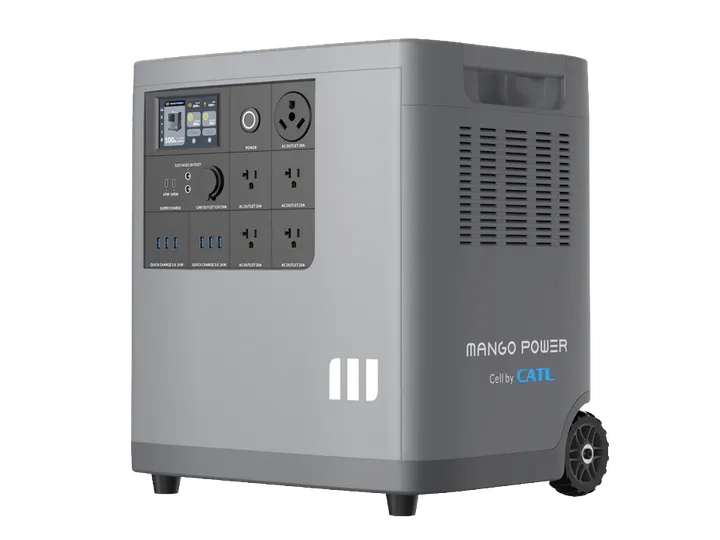
Mango Power E
8.2 / 10 · Premium
Mango Power E
The Mango Power E looks like a strong fit for buyers who want serious backup capability, fast charging, and proven inverter performance, but it gives up some polish in app quality, display accuracy, and overall housing feel.
This is a large portable power station aimed at real backup use, not casual camping. The strongest points from the video are its confirmed 3000W continuous inverter performance, strong solar input, quiet operation under heavy input, and long-life LFP battery platform. The main tradeoffs are its weight, some build quality concerns, and a display/app experience that seems less refined than competing units.
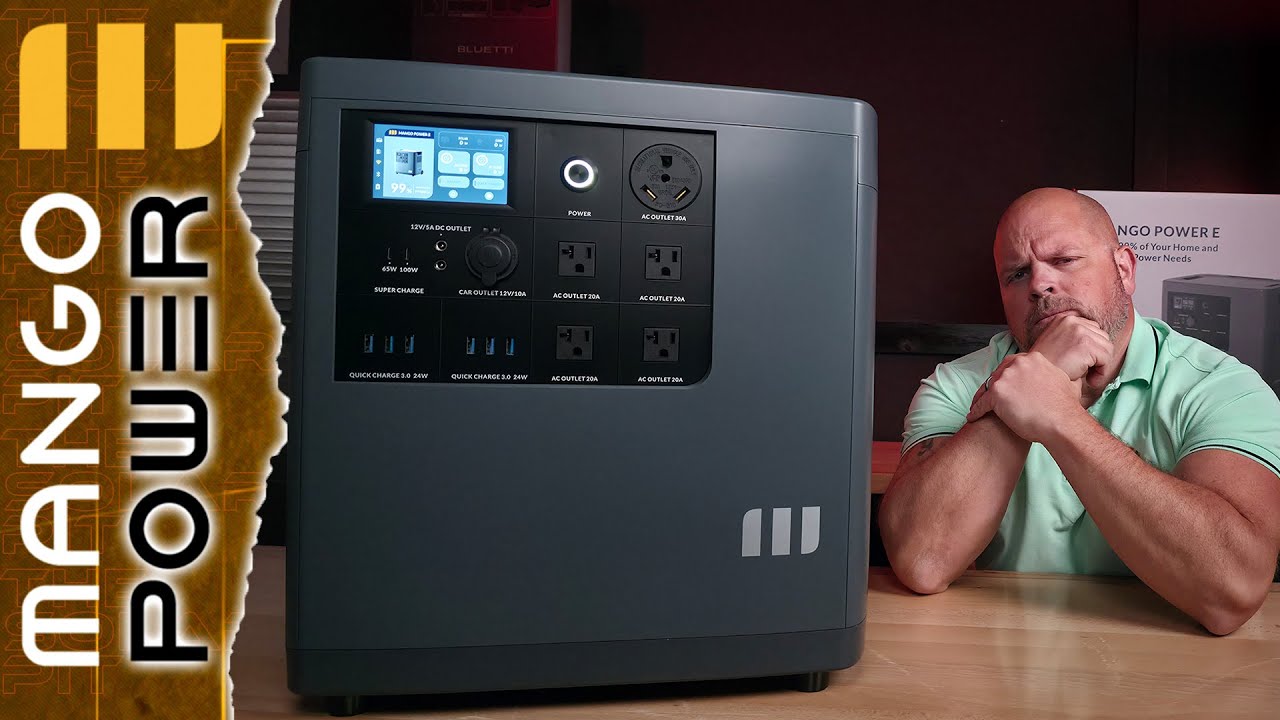
Watch Before You Buy
See how it actually performs
Best For
This is best for users who want reliable performance without jumping into ultra expensive systems.
Watch For
Limited expansion if your power needs grow significantly
Quick Decision
The fast answer most buyers actually want
This section is built to help you decide quickly whether this product fits your needs before you dig through the rest of the review.
Standout Feature
Strong real-world backup performance with a confirmed 3000W continuous inverter and fast charging options.
Biggest Tradeoff
The core power performance looks solid, but the display accuracy, basic app, and cheaper-feeling exterior reduce the premium feel.
Value Summary
The value here is strongest for buyers who care more about backup capability and charging speed than compact size or premium finish. If your priority is dependable high-output power and expandable home backup potential, it appears compelling. If you care a lot about interface quality, refined build materials, or highly polished software, there may be tradeoffs to consider.
Use Case Fit
Where this product fits best in real life
This section helps you quickly map the product to real scenarios so you can tell whether it fits your situation or whether you should be looking at something else.
Home backup for essential circuits and larger 120V loads
Excellent FitThe video shows it connected to a transfer panel and handling whole-shop 120V circuit backup with one unit, making it a strong match for buyers focused on outages and emergency use.
Fast solar recharging for off-grid or backup setups
Excellent FitIts high claimed solar input was reportedly approached in testing, which makes it a practical option for people who want quick daytime recovery from solar.
Frequent grab-and-go portable use
Situational FitIt is technically portable thanks to wheels and a handle, but at over 100 pounds, this is better described as movable than easy to carry.
Buying Options
Mango Power E
Choose the best buying path based on how you like to shop
Scorecard
How this product stacks up where it actually matters
This scorecard gives a faster read on the categories most buyers care about so you can spot the strengths and tradeoffs without digging through every section first.
Power Delivery
0.0 / 10
The inverter performance appears to be one of the strongest parts of this unit, with confirmed pure sine wave output and convincing continuous output behavior.
Charging Flexibility
0.0 / 10
Fast AC charging, strong solar input support, and combined charging options make this look very capable for backup recovery.
Build and Portability
0.0 / 10
The wheels and handle help, but the weight is substantial and the reviewer had concerns about the plastics, housing flex, and wheel quality.
App and User Interface
0.0 / 10
The app seems usable but basic, and the screen's time estimates and state-of-charge behavior raised clear concerns.
Pricing Intelligence
Worth considering if performance matters more than polish
For a buyer looking at this class of large backup power station, the bigger question is not just price but whether the power delivery, charging speed, and battery platform justify the compromises in interface and finish. This looks easier to justify for backup-focused buyers than for buyers who want the most refined user experience.
Buying Insight
This makes more sense if you need real backup capacity
Buyers who will actually use high output, transfer-panel backup, or fast recharge capability are more likely to justify the cost than casual users.
Buying Insight
Compare polish as much as raw specs
The power hardware appears strong, but buyers in this tier should compare app quality, display accuracy, and exterior build feel against alternatives.
Buying Insight
Expansion and split-phase potential may matter
If your long-term plan includes a larger backup setup or 240V capability through paired units, that could improve the overall value case.
Brand Store Path
Usually best when direct support, bundles, or direct promos matter more.
How I Test
Tested for real backup use, not just spec sheet claims
This draft prioritizes practical performance: inverter output under load, charging behavior, usable capacity, transfer behavior, noise, and day-to-day ownership issues. Where evidence is limited, conclusions stay conservative.
Test Focus
High-load inverter and overload testing
The reviewer tested continuous output near the rated 3000W level and checked how the unit behaved when pushed beyond safe output.
Test Focus
Real-world backup connection testing
The unit was connected to a transfer panel to observe switching behavior and practical backup performance with real circuits and appliances.
Test Focus
Charging, solar input, and noise observation
The review looked at AC charging speed, solar input behavior near the stated maximum, and fan noise during heavy charging conditions.
Technical Details
Key specs that matter early in the buying decision
This section belongs near the top because serious buyers often want to sanity check the core specs before they commit more time.
Battery Capacity
3533Wh rated
Inverter Output
3000W continuous, 6000W surge
Battery Chemistry
LFP
Weight
Just over 100 pounds
What I liked
Confirmed 3000W continuous inverter performance
Very fast AC and solar charging potential
Quiet fan noise under heavy input for this class
LFP battery using CATL cells
Works well for serious backup and transfer-panel use
What gave me pause
Very heavy despite the wheels and handle
Display charge and time estimates appear inaccurate
App is functional but basic
Housing plastics and wheels feel less premium than some rivals
Questions that matter before and after the click
This section is split intentionally so buyers can either validate the purchase decision or dig deeper into real world ownership questions.
Based on the video, yes if your priority is meaningful backup capability rather than lightweight portability. The reviewer used it with a transfer panel and found the inverter performance strong for real backup use.
The reviewer says the unit delivers pure sine wave output and specifically confirmed that point, which is usually what buyers want for sensitive devices.
The biggest cautions from the video are the weight, the cheaper-feeling housing and wheels, and the less polished display/app experience. Those may matter if ownership experience is just as important to you as raw power performance.
The video suggests it holds close to its rated 3000W continuous output until low state of charge, which is a strong result for a unit in this category.
Only partially. The reviewer observed successful switching in real use with no appliance disruption, but did not have equipment to confirm the exact transfer time to the millisecond.
Yes. The reviewer called out inaccurate remaining-time estimates and questionable state-of-charge behavior on the display, which can make day-to-day monitoring less trustworthy.
Should you buy the Mango Power E?
Based on the video, the Mango Power E appears to be a capable high-output backup power station with strong inverter performance, fast charging, and a solid battery foundation. The caution is that it does not seem especially refined in software, screen behavior, or exterior build feel. If you want serious backup first and polish second, it makes sense. If you want a more premium ownership experience, it may be worth comparing closely before buying.