
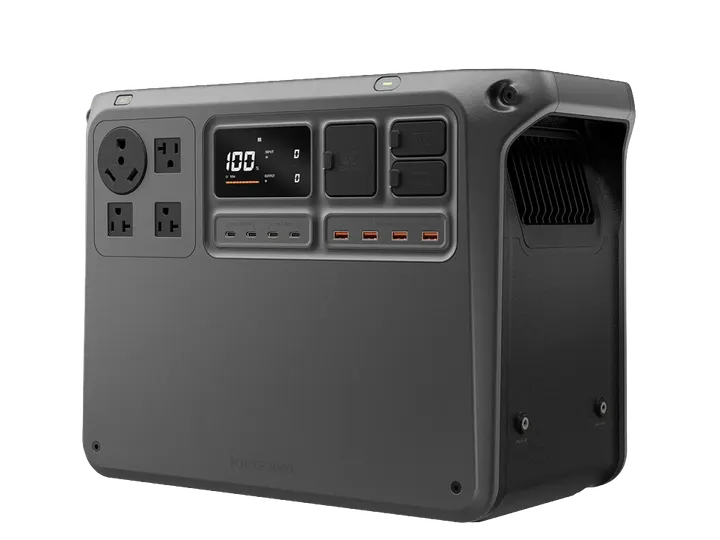
DJI Power 2000
8.8 / 10 · Premium
DJI Power 2000
The DJI Power 2000 looks like a strong fit for buyers who want quiet, high-output backup power in a well-built package, but the solar adapter requirement and lack of 240V support are important limits.
This portable power station stands out for its 3,000W inverter, very quiet operation, fast AC charging, and expandable battery ecosystem. It also appears well suited for home backup of essential 120V loads, RV use, and mobile power. The main tradeoffs are that solar charging requires a separate proprietary adapter and the system cannot be configured for 240V use.
Watch Before You Buy
See how it actually performs

Best For
This is best for users who want reliable performance without jumping into ultra expensive systems.
Watch For
Limited expansion if your power needs grow significantly
Quick Decision
The fast answer most buyers actually want
This section is built to help you decide quickly whether this product fits your needs before you dig through the rest of the review.
Standout Feature
Very quiet operation paired with a high-output 3,000W inverter.
Biggest Tradeoff
You need a separate proprietary adapter for solar input, and the unit is limited to 120V only.
Value Summary
Buyers who want a quiet, capable, expandable power station for 120V backup or mobile use may find real value here, especially if they care about inverter performance and app reliability more than open solar compatibility.
Use Case Fit
Where this product fits best in real life
This section helps you quickly map the product to real scenarios so you can tell whether it fits your situation or whether you should be looking at something else.
Essential 120V home backup
Excellent FitA strong match for backing up selected household circuits or appliances where quiet operation, fast switchover, and dependable output matter more than whole-home or 240V support.
RV, tailgating, and mobile power
Excellent FitThe combination of 3,000W output, multiple ports, low fan noise, and portable form factor makes it a practical option for travel, events, and flexible power away from home.
Solar-reliant off-grid setups
Situational FitIt can accept substantial solar input, but the need for a proprietary adapter makes it less convenient for buyers who want simple direct panel compatibility or a more open ecosystem.
Buying Options
DJI Power 2000
Choose the best buying path based on how you like to shop
Scorecard
How this product stacks up where it actually matters
This scorecard gives a faster read on the categories most buyers care about so you can spot the strengths and tradeoffs without digging through every section first.
Power Output
0.0 / 10
A 3,000W pure sine wave inverter and stable full-load test results suggest strong output capability for a unit in this class.
Efficiency
0.0 / 10
Estimated inverter efficiency of 89.6% is notably strong based on the testing described.
Ease of Ownership
0.0 / 10
The app appears reliable and useful, but proprietary accessories and solar adapter requirements add friction.
Flexibility
0.0 / 10
Expansion support helps, but the lack of 240V capability and no direct solar input without an adapter reduce overall versatility.
Pricing Intelligence
Worth considering if quiet output and expandability matter more than accessory costs
Value here seems tied less to raw capacity alone and more to the overall package: quiet charging, strong inverter performance, fast UPS response, and expansion options. Buyers should still factor in the added cost and inconvenience of DJI-specific accessories if solar charging is part of the plan.
Buying Insight
Best value for buyers who will use its strengths
This makes more sense if you care about quiet charging, strong inverter performance, UPS behavior, and a broader accessory ecosystem rather than just comparing battery size alone.
Buying Insight
Budget for accessories if solar matters
If solar charging is part of your plan, the required adapter should be treated as part of the real purchase cost rather than an optional extra.
Buying Insight
Expansion may matter more than the base unit alone
For short outages or appliance-level backup, the built-in capacity may be enough. For transfer switch use across several circuits, buyers may need to factor in expansion batteries from the start.
Amazon Path
Usually best for speed, easy checkout, and familiar returns.
How I Test
Real-world power testing over spec-sheet claims
This draft focuses on practical things that matter in ownership: usable capacity, inverter behavior under load, charging speed, noise, backup switching, and the real limitations that affect how the unit fits into daily use.
Test Focus
Full-load inverter run test
The unit was reportedly run from 100% to 0% at its full rated load to check whether the inverter could sustain output without shutdowns or instability.
Test Focus
Usable capacity measurement
Rated capacity was compared with delivered usable watt-hours to estimate inverter efficiency and give a more realistic picture of what buyers may actually get in use.
Test Focus
Charging noise and backup behavior check
Noise was observed during high-rate AC charging, and the UPS switchover timing was noted to judge how well the unit fits indoor backup and shared-space use.
Technical Details
Key specs that matter early in the buying decision
This section belongs near the top because serious buyers often want to sanity check the core specs before they commit more time.
Battery Capacity
2,042Wh
Inverter Output
3,000W continuous pure sine wave
Dimensions
17.5 x 8.5 x 13 inches
Weight
47.8 pounds
What I liked
Strong 3,000W continuous inverter output
Very quiet even during high-rate charging
Fast AC charging with reported 0 to 100% in around 70 minutes
Expandable battery system for larger backup needs
App connectivity appears stable and genuinely useful
What gave me pause
Solar charging requires a separate proprietary adapter
120V only with no 240V system option
Base capacity may feel limited for heavier multi-circuit backup
Not recommended for high-moisture or very dusty environments
Questions that matter before and after the click
This section is split intentionally so buyers can either validate the purchase decision or dig deeper into real world ownership questions.
Based on the transcript, no. This unit is limited to 120V use and cannot be combined into a 240V system.
Not directly. The transcript says you need DJI's proprietary solar kit and adapter to use solar charging and to reach the maximum solar input figures mentioned.
It depends on what you want to run. For essential appliances or lighter loads, it may be enough. For several circuits through a transfer switch, the reviewer suggests looking at expansion batteries.
The reviewer describes it as ultra-quiet and says fan noise stayed under 30 decibels while charging at over 1,400 watts, which suggests it should be easy to live with indoors.
The transcript states it has a 10 millisecond UPS switchover, which is faster than many competing units and should help keep supported devices running through brief outages.
Not for every environment. The reviewer specifically says they would not recommend it in high-moisture or very dusty areas because it is not rated for that kind of use.
Should you buy the DJI Power 2000?
For buyers who want a polished, quiet, high-output power station for essential backup power, RV use, or portable 120V power, the DJI Power 2000 looks like a solid option. It makes the most sense if you are comfortable with DJI's accessory ecosystem and do not need 240V capability or a more open solar setup.