
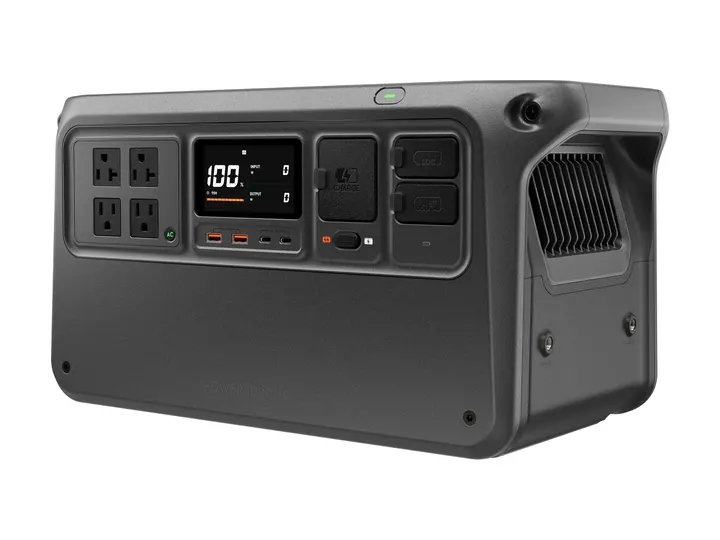
DJI Power 1000 Portable Power Station
8.6 / 10 · Premium
DJI Power 1000 Portable Power Station
The DJI Power 1000 stands out as a compact, fast-charging power station with unusually strong drone integration, but its best value is for buyers who will actually use those DJI-specific advantages.
This is a portable 1,024Wh power station with fast AC charging, very quiet operation, and strong inverter performance in the testing described. The biggest reason to consider it is the DJI ecosystem support, especially fast charging for compatible intelligent drone batteries. The main tradeoff is that some charging flexibility appears to rely on DJI-specific accessories rather than more universal connections.
Watch Before You Buy
See how it actually performs

Best For
This is best for users who want reliable performance without jumping into ultra expensive systems.
Watch For
Limited expansion if your power needs grow significantly
Quick Decision
The fast answer most buyers actually want
This section is built to help you decide quickly whether this product fits your needs before you dig through the rest of the review.
Standout Feature
DJI-specific SDC ports for fast charging compatible drone batteries.
Biggest Tradeoff
Some charging and solar use appears to depend on proprietary accessories instead of more universal built-in connections.
Value Summary
The strongest value here is for DJI drone owners who want one power station that can handle general backup power and faster, more direct field charging for compatible batteries. If you do not need the DJI-specific features, the value depends more on whether you prioritize quiet operation, fast recharge times, and portable size.
Use Case Fit
Where this product fits best in real life
This section helps you quickly map the product to real scenarios so you can tell whether it fits your situation or whether you should be looking at something else.
DJI drone field charging
Excellent FitA strong match for Air 3 or Mavic 3 owners who want faster, more integrated battery charging from a portable station.
Home backup for small essentials
Good FitThe UPS function and strong inverter output make it a practical option for keeping devices like routers, computers, or a freezer running through short outages.
General camping or road-trip power
Situational FitIt is portable and quiet, but the overall value is more compelling if you also benefit from the DJI-specific charging features.
Buying Options
DJI Power 1000 Portable Power Station
Choose the best buying path based on how you like to shop
Scorecard
How this product stacks up where it actually matters
This scorecard gives a faster read on the categories most buyers care about so you can spot the strengths and tradeoffs without digging through every section first.
Portability
0.0 / 10
For a 1,024Wh power station, the size and stated 29.6-pound weight look relatively manageable.
Charging Speed
0.0 / 10
Fast AC charging is a clear strength based on the stated 0 to 80% and 0 to 100% times.
Output Capability
0.0 / 10
The reported high-load testing and short-term surge capability suggest strong real-world inverter performance.
Universal Flexibility
0.0 / 10
The feature set looks powerful, but some charging and solar functionality appears to depend on DJI-specific accessories.
Pricing Intelligence
Worth a closer look if you will use the DJI ecosystem features
This looks easier to justify for DJI drone users than for general buyers shopping purely by capacity. If the proprietary battery charging and compact portability matter to you, the premium may make more sense. If not, compare it carefully against similarly sized power stations with more universal input options.
Buying Insight
Best fit for DJI owners
If you own compatible DJI drones, the specialized battery charging features add practical value beyond normal power station use.
Buying Insight
Compare accessory costs
Before buying, check what extra hardware is needed for solar charging or vehicle charging, since the setup described includes optional add-ons.
Buying Insight
Do not pay premium for features you will not use
If you mainly want a standard 1,000Wh power station for casual backup or camping, compare this against alternatives with more universal connectivity.
Amazon Path
Usually best for speed, easy checkout, and familiar returns.
How I Test
Real-world power testing over spec-sheet claims
This draft prioritizes how the unit behaves in actual use: charging speed, output stability, noise, portability, and whether the feature set solves real problems. Where the source is limited, conclusions stay conservative.
Test Focus
High-output discharge testing
The unit was run under heavy load, starting near 2,494W and discharged down to zero while settling around 2,000W, with no problems reported in the source.
Test Focus
Recharge speed evaluation
Charging behavior was reviewed across AC and solar input claims, with emphasis on how quickly the unit can recover from empty in practical use.
Test Focus
Noise and close-range usability check
Noise was assessed during full-rate charging, with the source describing operation quiet enough to fall below the reviewer's meter threshold.
Technical Details
Key specs that matter early in the buying decision
This section belongs near the top because serious buyers often want to sanity check the core specs before they commit more time.
Battery Capacity
1,024Wh
Weight
29.6 lb
Dimensions
9.5 x 17.5 x 9 in
UPS Switch Time
20 ms
What I liked
Very fast AC recharging
Exceptionally quiet in the testing described
Strong inverter output under heavy load
Useful UPS backup function
DJI battery charging integration is genuinely distinctive
What gave me pause
DJI-specific advantages may not matter to non-DJI buyers
Solar setup appears to require extra accessories
Vehicle charging is optional rather than built in
Premium positioning may be harder to justify for general use alone
Questions that matter before and after the click
This section is split intentionally so buyers can either validate the purchase decision or dig deeper into real world ownership questions.
Based on the source, the clearest fit is someone who wants a portable power station and also owns compatible DJI drone batteries. It can still work for home backup or travel power, but the DJI-specific charging features are a big part of what makes it stand out.
The source describes using add-on boxes with XT60 connections for solar input rather than a direct MC4 connection on the unit itself. That means you should verify exactly what accessories are required before buying.
It appears capable of both. The UPS function makes it useful for backup at home, while the portable size, quiet operation, and DJI battery charging support make it appealing for field use as well.
The source describes it as unusually quiet, with a stated 23dB at full charging input and testing quiet enough to fall below the reviewer's meter threshold. Real-world noise will still depend on room conditions and load.
The source reports successful output testing up to 2,494W and states it can run up to 2,600W briefly, with higher peak output available. That suggests good headroom, but actual compatibility still depends on the startup demands of the device you are plugging in.
Not necessarily, but it may be useful if you plan to move the unit often. The source presents it as a convenience accessory that improves transport and access, not as a required part of the product.
Should you buy the DJI Power 1000 Portable Power Station?
The DJI Power 1000 looks like a well-rounded premium portable power station with unusually quiet operation, fast recharging, and meaningful advantages for DJI drone owners. For buyers outside that ecosystem, it may still be a solid option, but the buying case is less obvious unless its size, speed, and backup features line up with your needs.