
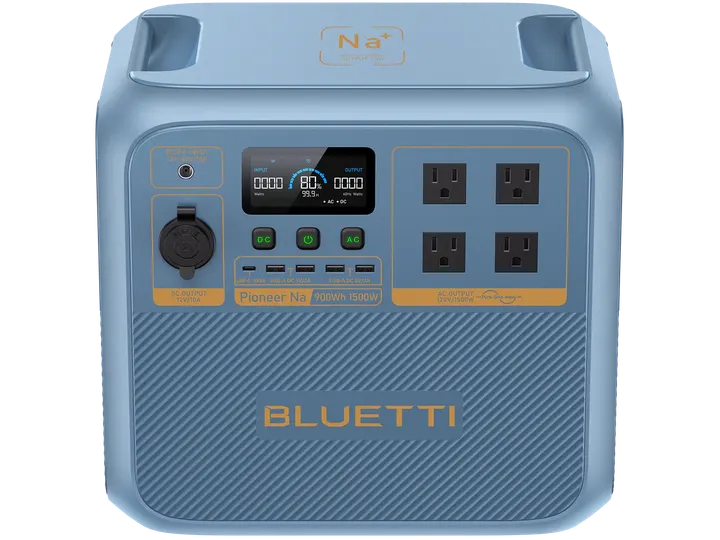
Bluetti Pioneer NA
8.8 / 10 · Mid Range
Bluetti Pioneer NA
The Bluetti Pioneer NA looks like a genuinely promising portable power station for buyers who care about cold-weather performance, fast recharging, and unusually high efficiency, but the newer sodium-ion platform still carries more long-term uncertainty than established lithium options.
Based on the provided testing, the Pioneer NA stands out for exceptional AC and DC efficiency, very fast recharge performance, and unusually strong cold-weather operation without added battery heaters. The main caution is not day-one performance but the fact that sodium-ion is still early in large-scale consumer use, so long-term ownership data is more limited than with mature LFP models.
Brand Store Coupon
Use this at checkout on the brand site
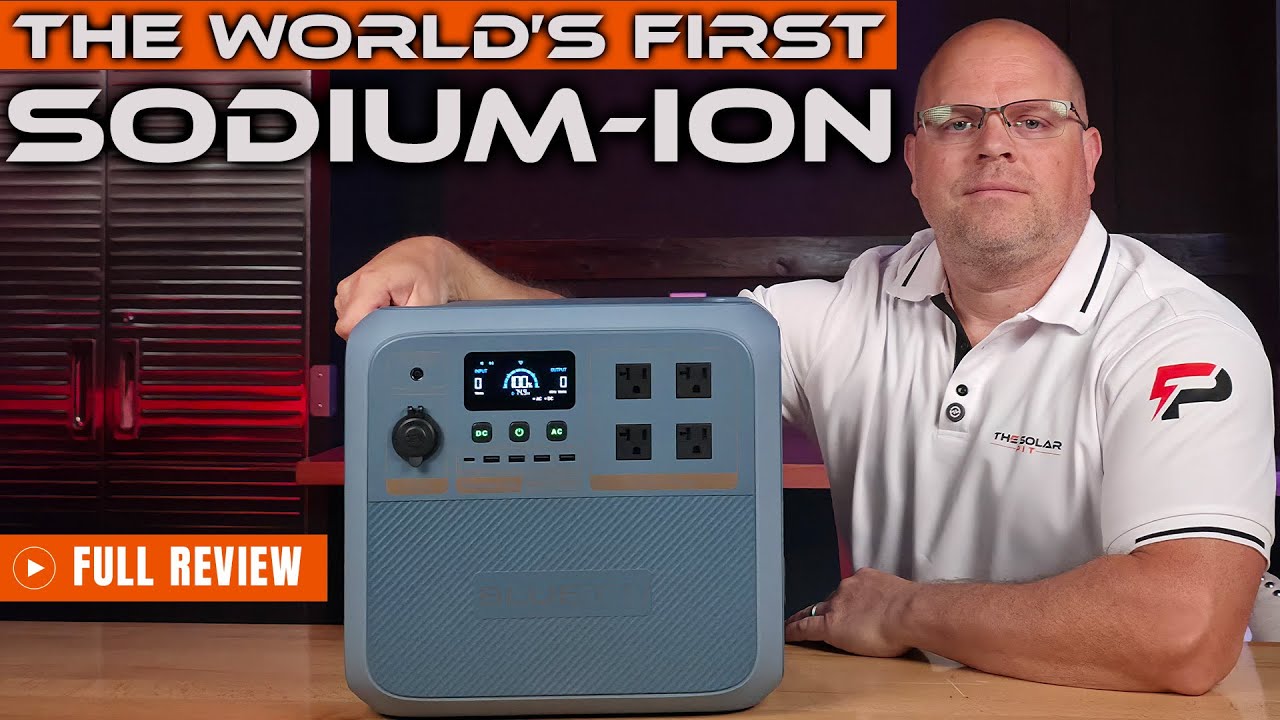
Watch Before You Buy
See how it actually performs
Best For
This is best for users who want reliable performance without jumping into ultra expensive systems.
Watch For
Limited expansion if your power needs grow significantly
Quick Decision
The fast answer most buyers actually want
This section is built to help you decide quickly whether this product fits your needs before you dig through the rest of the review.
Standout Feature
Cold-weather performance appears to be the biggest differentiator, with the unit continuing to charge and discharge in temperatures that would normally be a problem for many lithium-based power stations.
Biggest Tradeoff
The biggest tradeoff is that sodium-ion is still a newer consumer battery format, so long-term real-world data is not as established as more common LFP systems.
Value Summary
This looks like a strong value for buyers who actually need fast charging, high efficiency, and reliable use in freezing conditions. If you mostly want proven long-term chemistry with broader market history, a mature LFP model may still feel like the safer buy.
Use Case Fit
Where this product fits best in real life
This section helps you quickly map the product to real scenarios so you can tell whether it fits your situation or whether you should be looking at something else.
Cold-weather backup and outdoor use
Excellent FitThis looks especially well suited to buyers who expect to use a power station in freezing garages, winter camping setups, vehicles, or outdoor work where lithium systems can lose performance without heaters.
Fast turnaround charging between uses
Excellent FitIf quick recharge time matters more than squeezing out the smallest size or weight, the reported charging speed is a real advantage for frequent users.
Buyers who want the most proven long-term battery track record
Situational FitThis may still work well, but buyers who prioritize mature chemistry history over innovation may be more comfortable with a well-established LFP option until sodium-ion has more long-term field data.
Buying Options
Bluetti Pioneer NA
Choose the best buying path based on how you like to shop
Brand Store Coupon
Use this at checkout on the brand site
Scorecard
How this product stacks up where it actually matters
This scorecard gives a faster read on the categories most buyers care about so you can spot the strengths and tradeoffs without digging through every section first.
Efficiency
0.0 / 10
The reported AC and DC efficiency results were unusually strong and described as the best the reviewer had tested in this category.
Cold-Weather Performance
0.0 / 10
Cold-temperature charging and discharging are the clearest standout based on the transcript, with successful testing in very low temperatures.
Charging Speed
0.0 / 10
Recharge performance appears to be one of the unit's major strengths, especially for buyers who need quick recovery between uses.
Long-Term Confidence
0.0 / 10
The early performance looks strong, but sodium-ion still has less consumer-market history than established lithium platforms, so caution is reasonable.
Pricing Intelligence
Worth considering if its cold-weather strengths match your use case
Price alone does not decide whether this makes sense. The real value is in whether you will actually benefit from its cold-weather capability, fast recharge speed, and strong efficiency. Buyers who do not need those advantages may find better value in more established alternatives.
Buying Insight
Pay for strengths you will actually use
This product makes the most sense if cold-weather performance and fast charging are not just nice extras but real needs in your use case.
Buying Insight
New technology can change the value equation
Early-generation products can be exciting, but some buyers may prefer to wait for broader long-term reliability data before committing.
Buying Insight
Compare against proven LFP models, not just weaker alternatives
A fair buying decision should compare this against established LFP power stations with similar capacity and inverter output, especially if you do not need sub-freezing performance.
Brand Store Path
Usually best when direct support, bundles, or direct promos matter more.
Live Coupon
Current code: SOLARPIT08
How I Test
Real-world testing over spec-sheet promises
This draft is built around practical use: output efficiency, charging behavior, thermal control, cold-weather performance, and protection behavior matter more than marketing claims. The goal is to show where the product performs well and where buyer caution is still justified.
Test Focus
AC and DC usable-capacity efficiency testing
The unit was discharged through both AC and DC outputs to measure how much of the rated battery capacity could actually be delivered in use.
Test Focus
Cold-soak charging and discharging
The power station was kept in freezer conditions for an extended period, then tested under load and while charging to see whether it maintained output and charging behavior in extreme cold.
Test Focus
High-load stress and protection checks
Testing included sustained output near inverter limits, overload behavior, fan noise observations, and waveform quality to assess stability and system protection.
Technical Details
Key specs that matter early in the buying decision
This section belongs near the top because serious buyers often want to sanity check the core specs before they commit more time.
Battery Capacity
900Wh sodium-ion battery pack
Inverter Output
1500W continuous, up to 2250W in power lifting mode
Cycle Life
4000+ cycles
Weight
34.8 lb
What I liked
Exceptionally strong AC efficiency in the provided testing
Very good DC efficiency in the provided testing
Handles extreme cold without requiring battery heaters
Fast recharge capability for its size class
Clean overload shutdown and solid stress-test behavior
What gave me pause
Long-term sodium-ion ownership data is still limited
Heavier and bulkier than LFP for the same capacity
No Wi-Fi connectivity, only Bluetooth
Fan noise rises under maximum charging
Questions that matter before and after the click
This section is split intentionally so buyers can either validate the purchase decision or dig deeper into real world ownership questions.
Not across every category. Based on the transcript, sodium-ion looks especially strong in cold-weather use, charging speed, and stability. The tradeoff is lower energy density and a shorter market history than established lithium options.
Buyers who use portable power in freezing temperatures, want very fast recharging, or care a lot about usable efficiency seem like the best match. If those are not priorities, a proven LFP model may be the simpler choice.
Possibly. The early test results look strong, but sodium-ion is still relatively new in large-scale consumer power stations. Buyers who value proven long-term ownership history may want to wait for more field data.
According to the provided testing, it continued to discharge at full load and also accepted charging in sub-zero conditions after being cold-soaked for an extended period. That is one of the main reasons this unit stands out.
The transcript describes it as generally quiet, though fan noise becomes more noticeable during maximum-speed charging. That sounds reasonable for most real use, but not completely silent under heavy input.
It depends on how you plan to use it. Bluetooth works fine for nearby control, but buyers who want remote monitoring from farther away may see the lack of Wi-Fi as a downside.
Should you buy the Bluetti Pioneer NA?
If the testing here reflects broader real-world reliability, the Pioneer NA could be one of the more interesting portable power stations in its size class. It appears to deliver meaningful performance advantages, especially in cold conditions, but cautious buyers should still weigh the limited long-term track record of sodium-ion before treating it as an automatic replacement for proven LFP options.
Brand Store Coupon
Use this at checkout on the brand site