
ALLWEI PPS2400
7.8 / 10 · Mid Range
ALLWEI PPS2400
The Allway Power Station looks promising for backup power and high-draw home or shop use, but the easy-to-bump power button and some unanswered details keep it from being an easy recommendation without more hands-on context.
Based on the available transcript, this Allway unit stands out for practical power delivery, expandable capacity, and a rare grounding provision that could matter for real backup setups. It also appears well equipped on the front panel and capable of running meaningful household or shop loads. The main concern called out directly is the power button behavior, which can shut the unit off too easily if bumped.
Watch Before You Buy
See how it actually performs

Best For
This is best for users who want reliable performance without jumping into ultra expensive systems.
Watch For
Limited expansion if your power needs grow significantly
Quick Decision
The fast answer most buyers actually want
This section is built to help you decide quickly whether this product fits your needs before you dig through the rest of the review.
Standout Feature
A dedicated ground connection, which is still uncommon on many portable power stations and may be useful in more serious backup power setups.
Biggest Tradeoff
The single-tap power button appears too easy to turn off accidentally, which is not ideal for backup use.
Value Summary
This looks like a better fit for buyers who want a portable power station that can do more than charge small devices and may be used with transfer-switch style backup setups. The value seems strongest for people who will actually use its inverter output, expansion option, and RV or shop-friendly connections rather than casual users who just need a compact battery box.
Use Case Fit
Where this product fits best in real life
This section helps you quickly map the product to real scenarios so you can tell whether it fits your situation or whether you should be looking at something else.
Home backup for selected circuits
Excellent FitA strong match for buyers who want to keep essential 120V circuits running through a transfer switch and understand load management.
RV or mobile power setups needing a 30A outlet
Good FitThe included 30A RV-style output makes it look useful for RV owners who want a cleaner battery-based alternative to a generator for moderate loads.
Lightweight everyday portable charging
Situational FitIt may be portable enough for some people, but this seems better suited to higher-capacity backup needs than casual grab-and-go use.
Buying Options
ALLWEI PPS2400
Choose the best buying path based on how you like to shop
Scorecard
How this product stacks up where it actually matters
This scorecard gives a faster read on the categories most buyers care about so you can spot the strengths and tradeoffs without digging through every section first.
Power Output Practicality
0.0 / 10
The available ports and described ability to run meaningful loads suggest this is more than a basic emergency battery.
Backup Power Flexibility
0.0 / 10
Support for expansion and transfer-switch style use gives it broader backup potential than many smaller power stations.
Ease of Use
0.0 / 10
The simple layout is a plus, but the one-tap on and off behavior creates an avoidable usability concern.
Buyer Confidence
0.0 / 10
There are some encouraging signs here, but limited confirmed details and incomplete testing context keep the score moderate.
Pricing Intelligence
Worth considering if you need real backup capability, not just convenience power
For buyers comparing larger power stations, the main value question is whether you will use the higher-output AC side, RV-style outlet, and expansion support often enough to justify the cost. If your needs are lighter, a simpler unit may offer better value.
Buying Insight
Best value if you will use the AC side heavily
This kind of unit makes more sense when you actually need to run appliances, tools, or selected circuits instead of mostly charging phones and laptops.
Buying Insight
Expansion can improve long-term usefulness
If longer runtime matters more than maximum portability, an expandable system may hold value better than buying a small fixed-capacity unit first.
Buying Insight
Compare against setup complexity, not just sticker price
Buyers should think about cables, transfer-switch compatibility, and how they plan to use the RV or household output before deciding if the price makes sense.
Amazon Path
Usually best for speed, easy checkout, and familiar returns.
Brand Store Path
Usually best when direct support, bundles, or direct promos matter more.
How I Test
Real-world power testing matters more than spec-sheet claims
For a product like this, the useful questions are simple: what it can actually run, how it behaves under sustained load, and what compromises show up in normal use. A trustworthy review should focus on practical performance, setup limitations, and everyday usability rather than repeating marketing claims.
Test Focus
Capacity and inverter efficiency checks
The review approach mentioned direct testing of usable capacity and inverter efficiency rather than relying only on printed claims.
Test Focus
Whole-shop backup simulation
The unit was connected to a shop setup to see how it handled real circuits and everyday electrical demand in a more realistic environment.
Test Focus
Expansion battery integration
Testing included the add-on battery to evaluate how the system behaves when expanded for longer runtime.
Technical Details
Key specs that matter early in the buying decision
This section belongs near the top because serious buyers often want to sanity check the core specs before they commit more time.
USB Ports
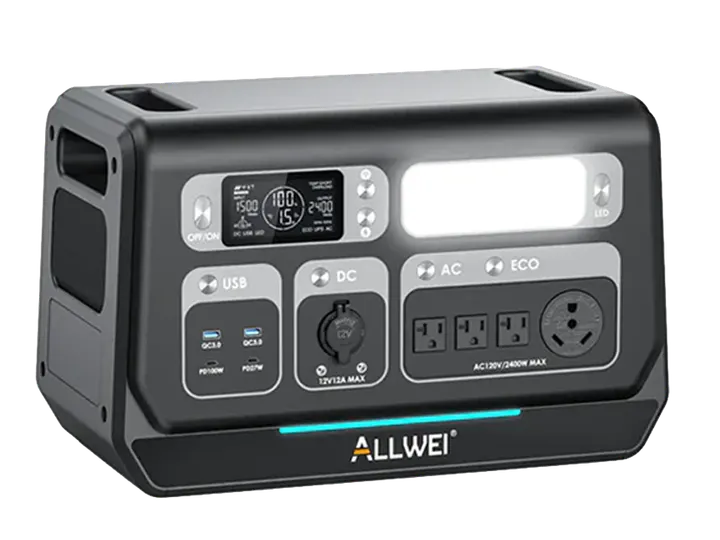
4 total: 2 QC 3.0, 1 100W USB-C, 1 PD27 USB-C
AC Outlets
3 regular 120V outlets
RV Output
30A RV outlet
Advertised Inverter Output
2400W
What I liked
Useful front-panel port selection
30A RV outlet adds practical flexibility
Expansion battery support
Ground connection is a thoughtful addition
Can handle more serious backup tasks than a small power station
What gave me pause
Power button can be turned off too easily if bumped
Some setup and communication details are unclear
Likely overkill for buyers with only light charging needs
Questions that matter before and after the click
This section is split intentionally so buyers can either validate the purchase decision or dig deeper into real world ownership questions.
Potentially yes, especially for selected 120V circuits through a proper transfer setup, but it is not a whole-house replacement and load management still matters.
Yes, the transcript clearly mentions an expansion battery and a dedicated expansion connection on the side.
Only if they actually need the larger inverter output and backup flexibility. For lighter everyday charging, a smaller unit may be easier to justify.
It appears capable of running a meaningful mix of lights and appliances, but the real limit depends on the total load and whether you stay within the inverter's output range.
It could be. The reviewer specifically points out that the unit can be turned off if bumped, which is a bigger concern in backup situations than in casual use.
It seems portable in the sense that the battery and inverter setup can be moved and stacked, but this is not the same kind of portability as a small carry-around power station.
Should you buy the ALLWEI PPS2400?
This Allway power station appears to be aimed at buyers who need meaningful backup power and more serious AC output than a small portable unit can provide. It has some practical strengths, especially for shop, RV, or transfer-switch style use, but the accidental shutoff risk is a real downside and there are still enough unknowns that a final buying decision should depend on full test results and current pricing.