
When I first got my hands on the LiTime 48V 5000W Inverter, I knew this wasn’t going to be a typical unboxing or specs rundown. I wanted to know one thing — can it really handle its claimed 5,000 watts continuously under real-world stress? Spoiler alert: it absolutely can. This isn’t a marketing test or a sponsored review — it’s a genuine, hands-on stress test designed to push this inverter to its limits.
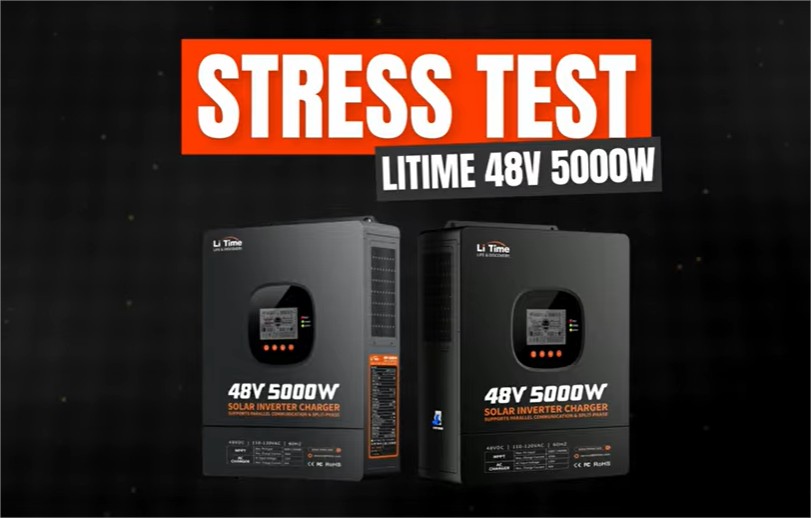
Over the course of several hours, I loaded this inverter close to its full rated output, monitored its sound levels, and tested how it handled both overload conditions and real-time recovery. The results left me both impressed and confident — this system is no gimmick; it’s a serious off-grid contender.
⚙️ First Impressions: Design and Setup
Right out of the box, the LiTime 48V inverter looks and feels like a professional-grade unit. It’s built for both 120V single-phase output and 240V split-phase capability (when paired with a second unit). That makes it versatile enough for everything from RV setups to full home backup configurations.

Setting it up was straightforward — the wiring was simple, though for this test, I used an open setup to make it easy to monitor performance and thermal behavior. I want to emphasize this: my test bench wasn’t meant to look polished; it was about testing true performance, not presentation.

Once connected, I started small — lights, outlets, a refrigerator, and a mini-split. The LiTime inverter handled everything without even breaking a sweat. But the real fun started when I began pushing it closer to its rated capacity.
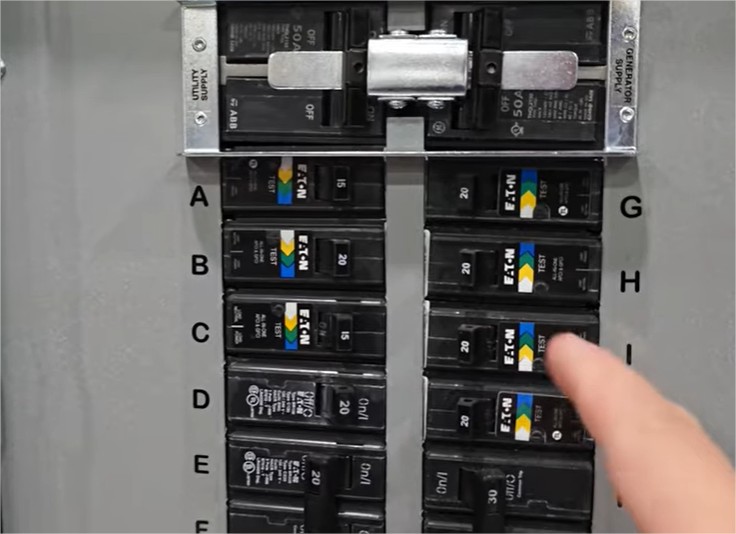
Setup Highlights:
- 48V DC input with 120V AC output (expandable to 240V split-phase)
- Capable of powering home circuits, RVs, and off-grid systems
- Straightforward wiring and setup
- Compact, professional-grade design
🔋 Real-World Load Testing: Can It Handle 5000 Watts?
To test its limits, I turned on every circuit I could — lights, an 85-inch TV, refrigerator, and a heat gun. Then I kicked in my mini-split’s heating mode and added a second heat gun to reach peak load conditions.
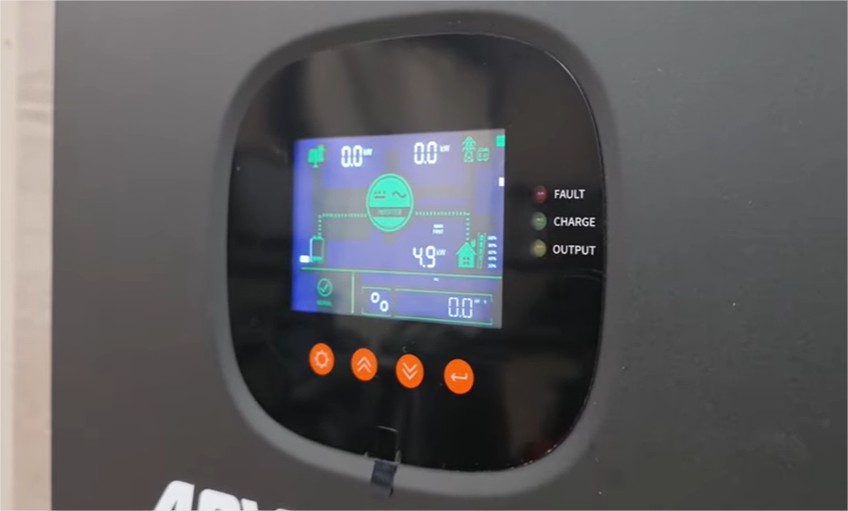
Before I knew it, I was drawing 4.8 to 4.9 kW continuously — right on the edge of its rated output. That’s when I pushed it a little further and triggered an overload shutdown. However, to my surprise, the inverter automatically restarted itself, recovering smoothly without manual intervention. That’s a feature I didn’t expect, and it immediately scored major reliability points in my book.
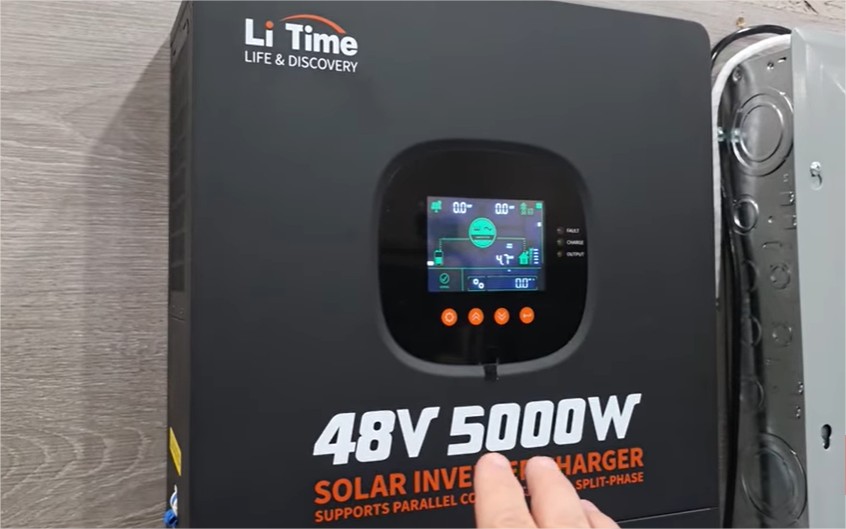
When I settled the load slightly below 5,000W — around 4,700 to 4,800 watts — the LiTime inverter ran flawlessly for a long stretch. It held voltage steady, produced clean sine wave output, and never exhibited thermal throttling.
Performance Results:
- Sustained 4.8–4.9 kW continuous load with stability
- Automatic restart after overload protection
- Clean, consistent 120V AC output under stress
- Perfect for extended high-load scenarios
🔇 Noise, Heat, and Efficiency Under Pressure
When testing large inverters, heat and sound management are critical — and the LiTime 48V 5000W delivered better than expected on both fronts. Using a decibel meter, I measured an average of 60–61 dB under max load. That’s about the same noise level as a quiet conversation or an indoor AC unit running on low.

What stood out even more was its thermal performance. Despite prolonged heavy loads near its limit, the inverter maintained consistent internal temperatures. The fans ramped up gradually and effectively, preventing overheating without excessive noise.
Key Observations:
- Sound output: 60–61 dB under full load
- Excellent fan control — smooth and efficient cooling
- No thermal shutdown or derating during continuous testing
- Stable internal temperatures even at max output
This kind of balance between performance and quiet operation is rare in high-output inverters, especially in this price class.
⚡ Overload Protection and BMS Coordination
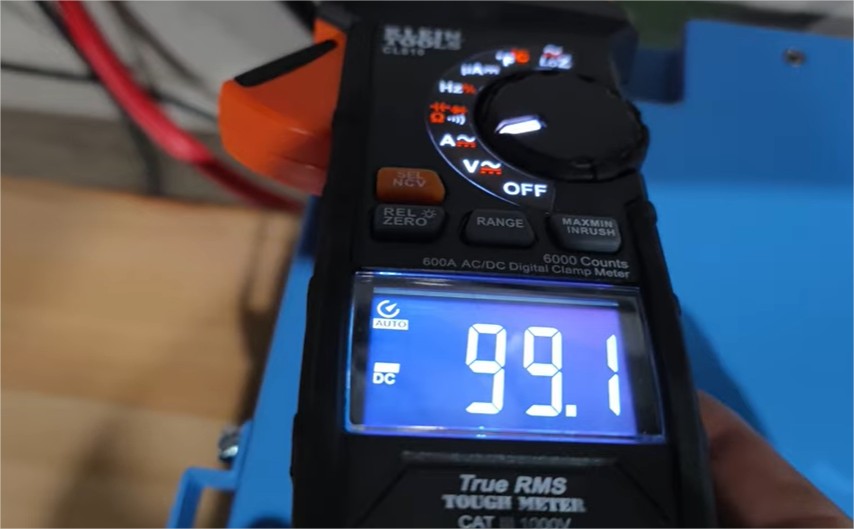
One of the most impressive parts of my test came when I accidentally overloaded the system beyond its rated 5,000W. Initially, I thought the LiTime inverter failed — but it was actually the battery’s BMS (Battery Management System) that shut down to protect itself from exceeding its 100A continuous output limit.

Once I adjusted my draw to stay under that limit, the inverter ran perfectly without interruption. This test confirmed that the LiTime inverter was not the weak point — it was the battery’s built-in protection.
The LiTime inverter itself handled surges gracefully, providing continuous, clean power up to its rated load and shutting down safely if the input exceeded limits. It even auto-recovered after overload — a sign of a truly intelligent protection design.
Protection System Features:
- Automatic overload recovery
- Safe shutdown under overcurrent conditions
- Full BMS compatibility
- Consistent performance under sustained stress
🧠 Real-World Applications and Suitability
After spending hours pushing this inverter, I can say it’s not just a lab performer — it’s ready for real-world use. Its ability to handle heavy continuous loads makes it ideal for off-grid homes, RVs, boats, workshops, and small commercial setups.
What I especially like is that it’s scalable. If you connect two units, you can unlock 240V split-phase output, enabling it to power large appliances or full home circuits. This modular flexibility gives it a clear advantage over many standalone inverters in the same class.
Ideal Use Cases:
- Off-grid home power systems
- Solar energy storage setups
- RV and camper installations
- Small business or garage backup
- Hybrid solar + grid-tied systems