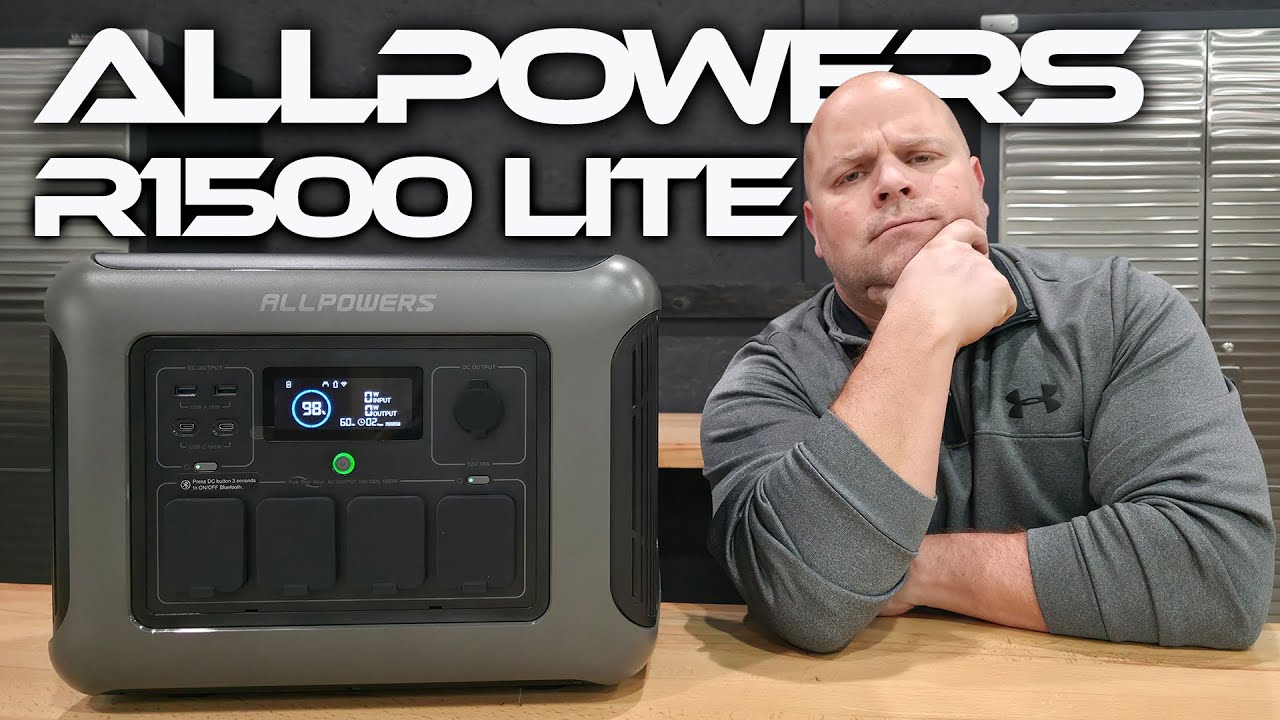
When it comes to portable power stations, finding the right balance between price, performance, and reliability isn’t easy. I’ve tested plenty of budget and premium models, and many fall short when pushed hard in real-world conditions. That’s exactly why I wanted to put the AllPowers R1500 Lite through proper stress testing and see if it truly delivers what it promises.
SPECIAL 8% OFF DISCOUNT CODE: AFJS8

In this review, I’m sharing my hands-on experience after running the AllPowers R1500 Lite through discharge tests, thermal checks, noise measurements, capacity validation, and UPS performance. If you’re looking for a dependable mid-range power station for backup, camping, or light home use, this one deserves a serious look.
Design, Build Quality, and Port Selection
Right out of the box, the AllPowers R1500 Lite feels well put together. At around 33 pounds, it’s not ultralight, but it’s very manageable for a power station in this class. The casing feels solid, the handles are comfortable thanks to the padded underside, and the overall design looks modern without being flashy.
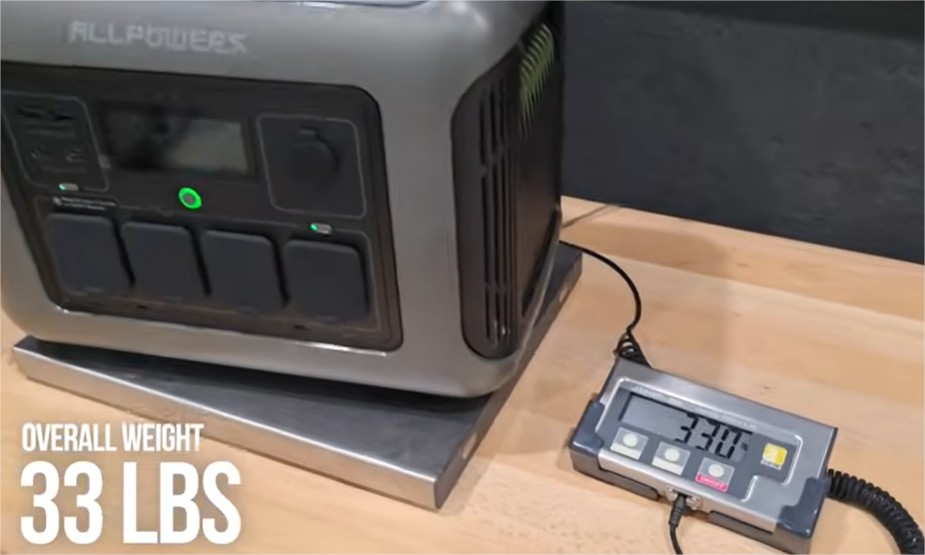
The port selection is practical and thoughtfully laid out. Everything is easily accessible, whether you’re plugging in AC appliances, charging via solar, or using DC outputs. The display is bright enough to read both indoors and outdoors, which is something I always appreciate in real-world use.


What you get on the front and sides:
- 4 × AC outlets with dust covers
- 1 × 12V car socket (10A & 120W)
- 2 × USB-A ports (18W each)
- 2 × USB-C ports (100W each)
- Dedicated AC and solar input ports

Backed by a 5-year warranty from AllPowers, the physical design immediately gave me confidence.
Inverter Performance and Thermal Stress Testing

The AllPowers R1500 Lite uses a pure sine wave inverter rated at 1,600 watts continuous output, and I always take claimed ratings seriously. I ran a sustained discharge test as close to that limit as possible to see whether it would throttle, overheat, or shut down.
The results were impressive for a unit at this price point. Even under heavy load, the inverter remained stable. Internal temperatures peaked around 127°F, which is well within a safe operating range. More importantly, the system managed heat efficiently and never triggered a thermal cutoff during my testing.

One thing worth noting is recovery behavior. After a heavy discharge, some power stations struggle when you immediately start charging them. The AllPowers R1500 Lite handled this scenario well, continuing to charge without excessive heat buildup. That’s not something I see consistently, even in higher-end units.
Noise Levels, Idle Consumption, and UPS Performance
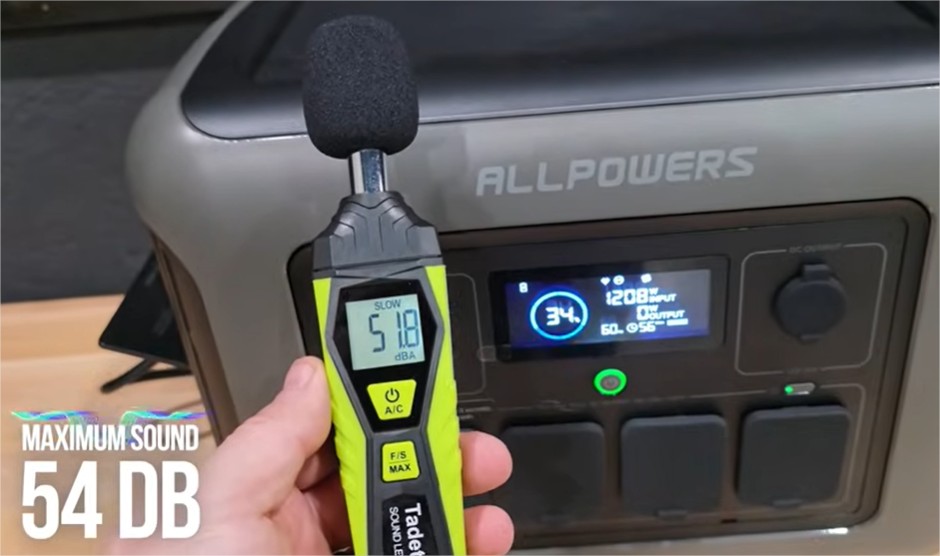
Noise can be a dealbreaker, especially if you’re using a power station indoors or near sleeping areas. During maximum AC charging at 1,200 watts, I measured 54 dB, which is very reasonable. Under normal use, it’s even quieter and blends into the background.
Idle consumption also matters if you’re planning to leave the unit on standby. I ran a 24-hour idle test with the AC outlets enabled, and the system consumed about 31% battery capacity, translating to roughly 13 watts per hour. That’s acceptable for a unit with a built-in UPS function.

Speaking of UPS, the AllPowers R1500 Lite switches power sources in 15 milliseconds. In practical terms, that’s fast enough that you won’t notice the transition. For routers, computers, and essential electronics, this makes it a viable small-scale backup solution.
Battery Capacity, Charging Efficiency, and Safety Protections
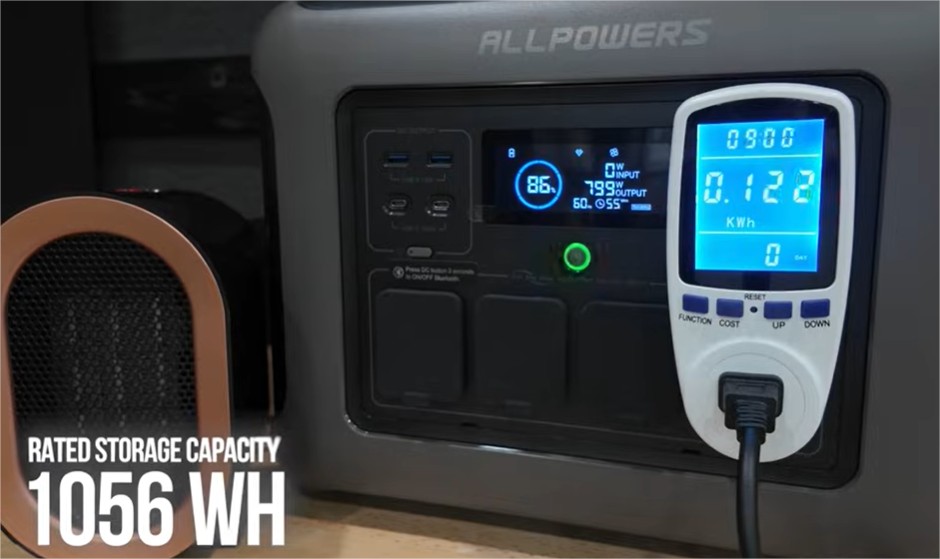
The AllPowers R1500 Lite uses a LiFePO₄ (LFP) battery rated at around 1,056Wh, with a claimed lifespan of 3,500 cycles to 80% capacity. In real-world testing, I measured approximately 935Wh of usable AC capacity, which is a solid result for this class.

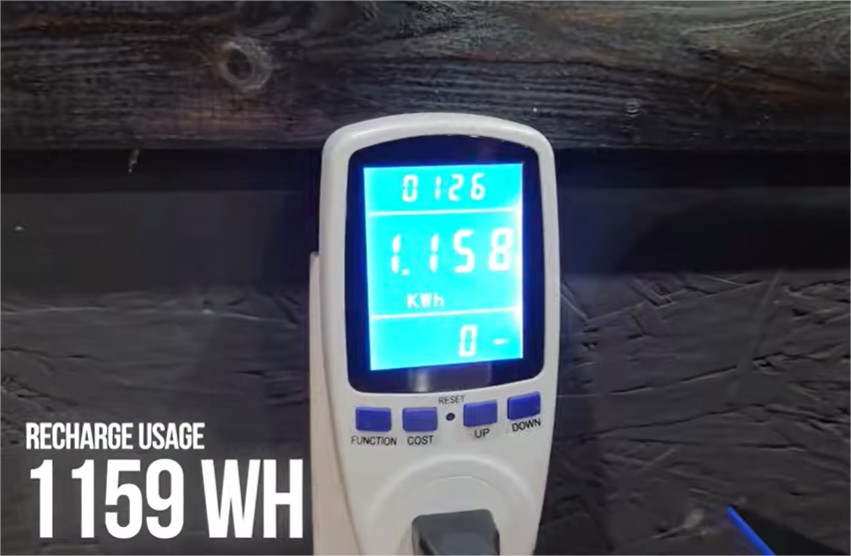
Recharging took about 1,159Wh from AC to return the battery to full, which indicates decent round-trip efficiency.
DC discharge behavior is slightly different—the unit allows discharge down to 0% on DC but cuts off AC output at 5%. While this might seem limiting, it’s clearly designed to protect the battery and extend overall lifespan.

Safety testing is where the AllPowers R1500 Lite really earned points with me. I intentionally overloaded the system using high-draw appliances to see how the BMS would respond. There was no surge headroom beyond 1,600 watts, but that’s actually a good thing here — the system shut down almost immediately, protecting the inverter and battery exactly as it should.
Key safety and power characteristics:
- Strict 1,600W limit with immediate overload protection
- Stable BMS response under stress
- No unsafe temperature spikes
- Safe charge-and-discharge simultaneously
App Experience, Charging Options, and Final Thoughts

The AllPowers R1500 Lite supports Wi-Fi app connectivity, though activation requires holding the DC button for a few seconds—a small detail that’s easy to miss.

Once connected, the app works reliably but remains fairly basic. You can monitor status and control outputs, but advanced features like detailed time-of-use settings or adjustable state-of-charge limits are missing.

Charging flexibility is decent for a unit of this size. Solar input maxes out at 650W, AC charging at 1,200W, and combined charging is capped at 1,200W as well. You can charge and discharge at the same time, which is useful for solar-assisted backup setups.
After pushing the AllPowers R1500 Lite through multiple stress scenarios, I came away genuinely impressed. Many budget-oriented power stations fail under the kind of testing I do—but this one didn’t. It stayed cool, recovered well, and consistently performed within its advertised specifications.
Final Verdict
The R1500 Lite isn’t trying to be a monster power station — and that’s exactly why it works. It does what it claims, protects itself under stress, and offers solid performance in a mid-range portable package.
If you need a reliable 1.6kW portable power station for emergency backup, camping, or home essentials — and you value stability over inflated specs— the AllPowers R1500 Lite is an easy recommendation from my side.